
How to Choose Assist Hook Size for Jigs and Lures
by PPFA
Assist-hook size numbers are useful within one product range, but they are not a universal measurement across every brand and model. A #1 from one range may not match the physical dimensions, wire gauge or shape of a #1 from another.
The safest way to choose is to compare the actual hook and rig against the jig or lure it will be fitted to.
Begin with the existing setup
If you are replacing a hook arrangement that already works, keep the old one as your reference. Compare the hook gap, overall length, cord length, attachment loop and how the hook hangs beside the lure. A ruler and a clear side-by-side photo can be more useful than the size number alone.
Where an official dimension table is available, use it. If dimensions are not stated, do not assume that another brand using the same size label will fit identically.
Check hook clearance
The hook should have enough clearance to move and expose the point without constantly catching against the jig body, another hook or a skirt. An oversized hook can interfere with the lure, while a very small hook may not give the physical fit you intended.
For twin-assist arrangements, check whether the two hooks tangle with each other during movement. For a lure with more than one hook position, check that adjacent hooks cannot readily catch each other.
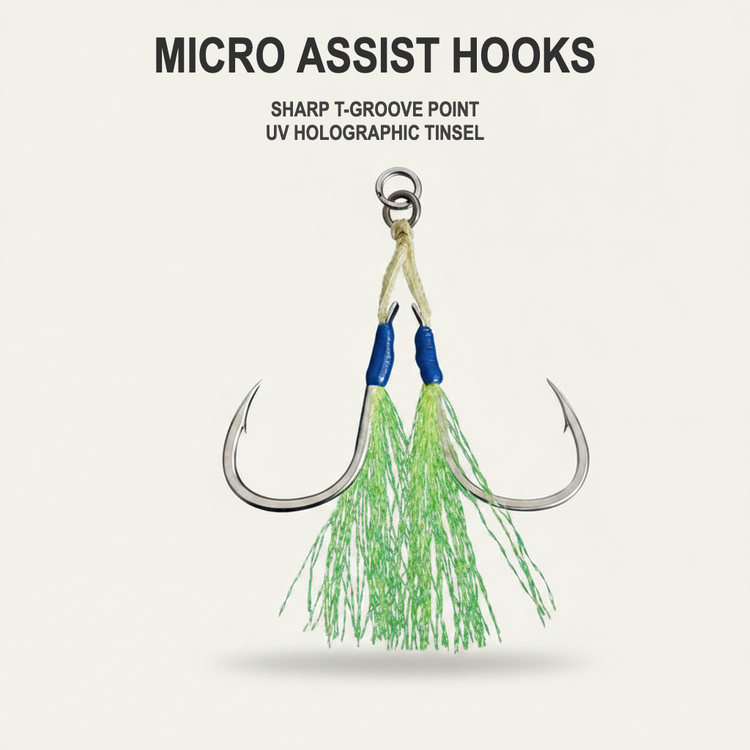
From the tackle box
Compare the actual hook sizes
Use the product photos and size options as a starting point, then check hook gap, cord length and clearance against your own jig.
Match the cord length to the attachment point
Assist-hook selection is not only about the metal hook. The cord or wire-core length affects where the hook sits against the jig. A short rig keeps the hook close to the connection; a longer rig places it farther down the body. Neither is automatically correct for every jig.
Attach the rig and hold the jig as it would hang. Check the position rather than relying on the packaged length alone. If the product page gives compatible applications, treat them as guidance and still check the actual fit.
Consider the intended fishing use
A micro jig, a compact slow-fall jig and a large offshore jig do not need the same physical hook arrangement. Start with the lure size and fishing method, then consider the target fish and the rest of the tackle. Do not add a heavy or bulky hook simply because it sounds stronger; it may change how a smaller lure balances or moves.
Single or twin assist hooks?
A single assist hook is a simple arrangement with fewer parts to tangle. Twin assists provide two hook points but require enough clearance for both hooks and cords to move. The right choice depends on the jig, the available space and how you plan to rig it.
If you use hooks at both ends of a jig, check that the front and rear arrangements cannot readily meet around the body. The exact configuration should make sense for the jig rather than being added automatically.
Check the connection components
Confirm that the assist loop fits the solid ring or other approved attachment point and that the adjoining split ring, solid ring and swivel—where used—fit together without binding. Load ratings should only be relied on when supplied by a trustworthy source.
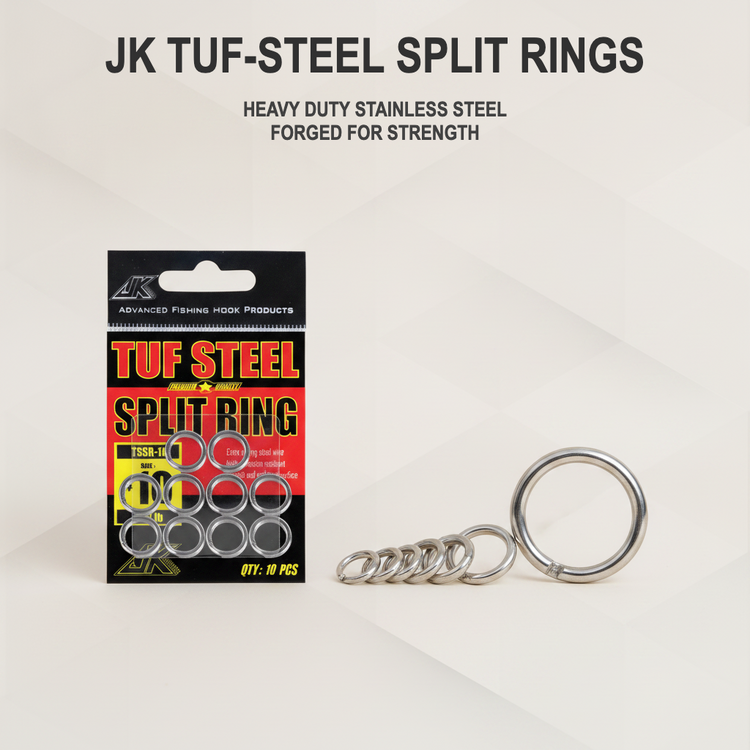
Complete the connection
Check the ring as part of the system
Compare ring diameter, wire thickness and clearance with the solid ring, swivel and split-ring pliers you plan to use.